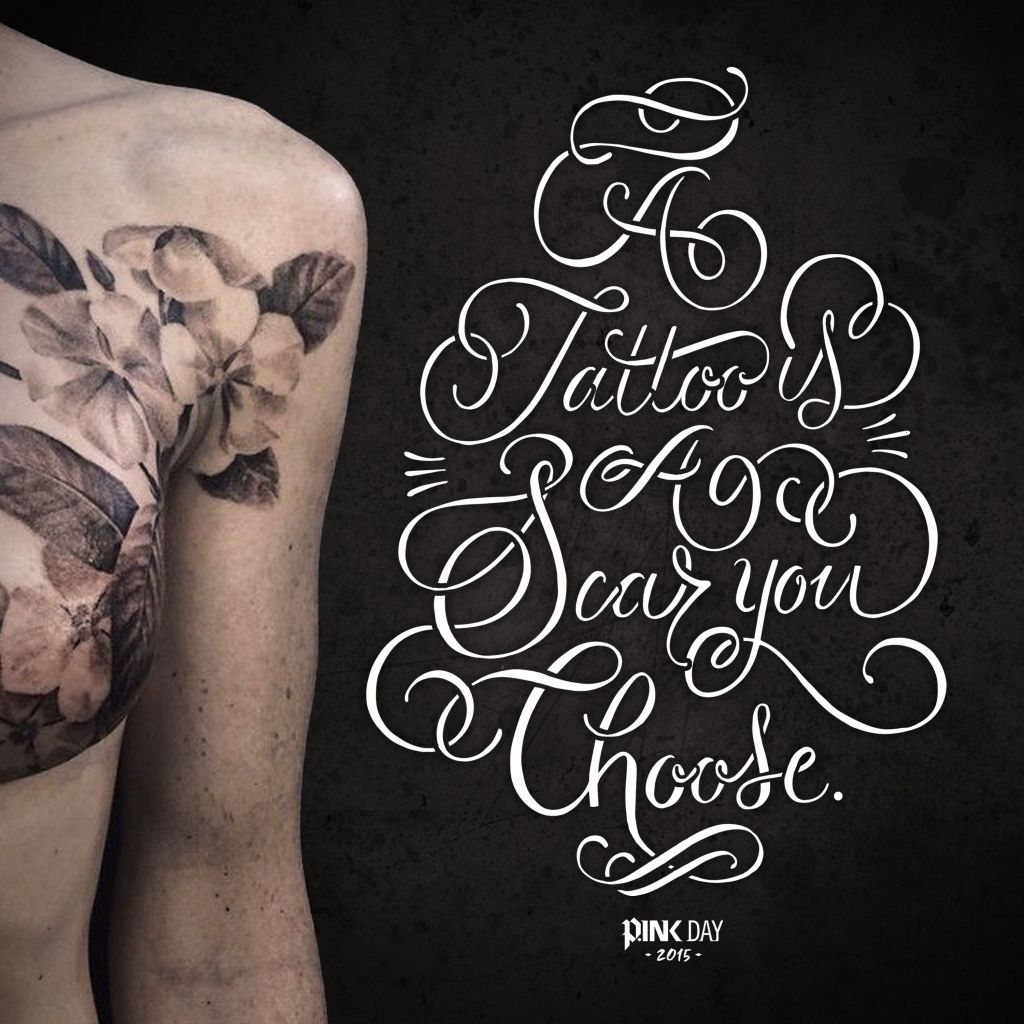
“I’m alive, but I want it to be on my terms again.”
That’s Molly, my sister-in-law, describing life after her double mastectomy. She was navigating something the medical community couldn’t solve: the gap between being cured and being healed.
Molly had survived breast cancer. The doctors said she was in great shape. But each morning when she looked in the mirror, she saw the reminder scars of her experience. She was one of 1.3 million women living with this reality — cured, but not healed.
“I didn’t want to be the same as before. I knew I was different, and I wanted to look different.”
Regaining control wasn’t about covering up the signs of cancer. It was about moving forward on her own terms. The medical community had done most of its job. Molly needed something else: agency. The power to transform her scars into something else, something beautiful. She was curious about a tattoo.
Our CP+B team learned there was already a subculture built on tattooing as a measure of control. When I spoke with tattoo artists about their work, they often used the word freedom. They helped people turn pain into beauty.
“I was the last person you’d expect to get a tattoo. It’s just not me.”
But these two communities—survivors seeking control and artists offering liberation—rarely connected. For many women, tattoos weren’t completely taboo, they were just so not them. What they were seeking was permission.
Our teams were finding signals of an underground movement. Scattered across blogs and forums survivors were asking the same questions: had anyone else thought about this? Did anyone know artists who specialized in this work? They were looking for resources, for answers, for help. But no one was connecting the dots.
That’s how P.ink was born.We filmed Molly’s powerful story, and then built a Pinterest platform that connected breast cancer survivors with tattoo artists who could help them reclaim their bodies. This was the first directory of artists experienced with post-mastectomy skin, the first gallery of healing tattoo designs, the first community where survivors could share their transformation stories.
P.ink became something bigger than a video and a website. We grew to create P.ink Day—an international event pairing survivors with artists for a day of healing. What started with 10 survivors and 10 artists in Brooklyn grew to multiple cities, then internationally.
“There’s so much trauma that happens in this area of the chest. And as he was tattooing… it felt like he was opening space for the release of that trauma. I didn’t realize that until this moment.”
That’s Christine at P.ink Day Boulder. Her words taught me something interesting about designing for trauma: it’s not just about moving from one state to another. Sometimes healing happens in the in-between moments, in spaces we create for people to experience something new and then let it go.
Over the years, P.ink grew to 30+ cities and was eventually acquired. We’re thrilled to help seed permission for those who want something new, to take control of their healing on their own terms, one day of profound transformation at a time.
 Ah, Humans