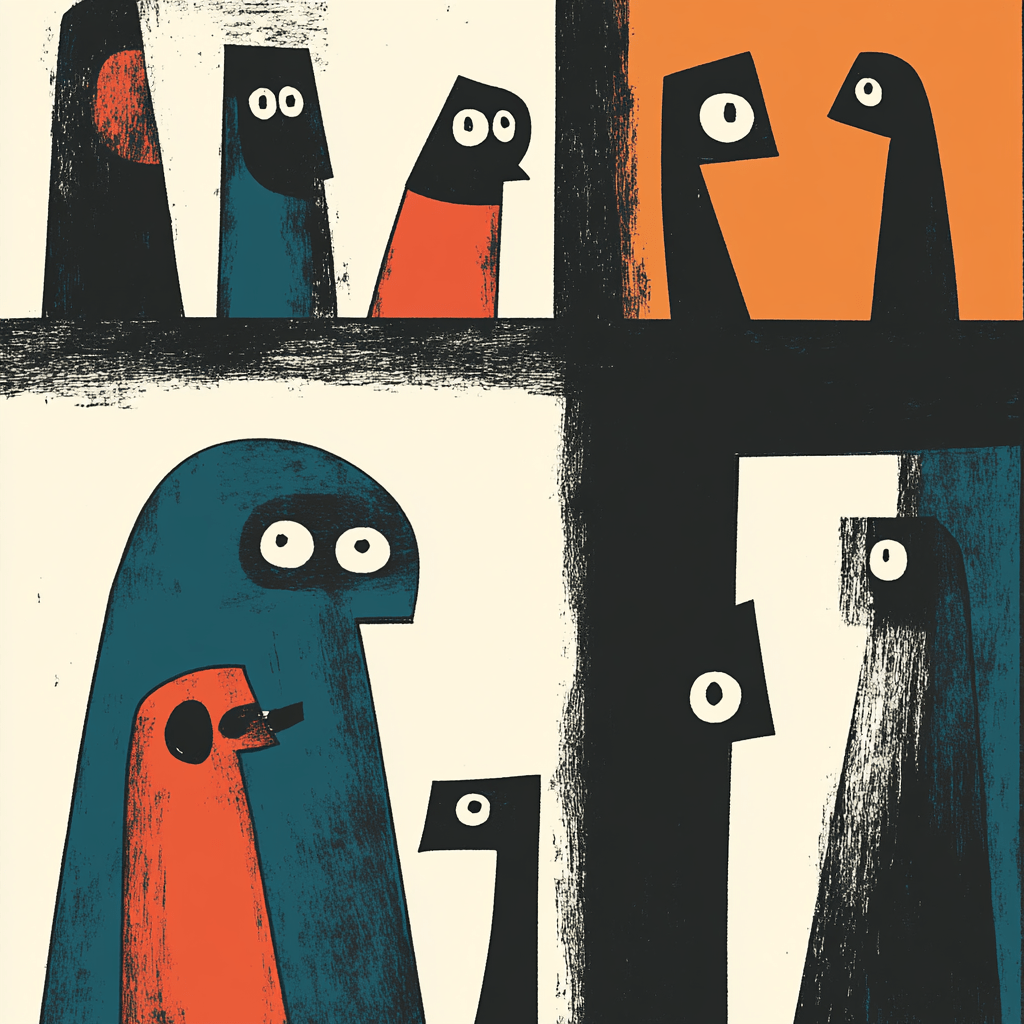
Your personal work is strategic work.
In my consulting work, I help organizations uncover the hidden dynamics shaping their culture, strategy, and customer experience. Sometimes the patterns worth noticing aren’t external — they’re baked into the way teams work together. This is one of those stories.
It wasn’t my proudest moment. But it stuck with me — because it revealed a workplace pattern I didn’t have words for yet.
Outside it was a perfect, sunny Sunday afternoon. Inside, at the office, our experience design team was working overtime on a pitch, putting our best ideas on the wall.
Down the hall, another team was birthing what would become one of the most recognizable ad characters in recent memory. (I’ll call him “Blaptain Blobvious.”)
We weren’t the team that created that magic. But we’d established value and had earned our way into the room — from “those systems thinkers for digital” to collaborators on strategy and execution. Our job that day was to help strengthen the work. That was everyone’s job. And it was often a joy.
Then “Marcus” walked in.
He was brilliant. Agencies were built around people like him. He was also unpredictable.
He glanced at our wall and snapped at the whole team.
“What is this? Who said you could be joining us? Why are you even here?”
That wasn’t the spirit that fueled the agency — the one we’d shown up for. On a Sunday afternoon. As head of the team, I stood my ground. Not shouting. Just calm, clear, and unshaken.
I told him he, ah, might find a more productive use for his energy.
He backed off. Left the area.
At the time, I thought I was standing up to a bully. And there was the bigger pattern we were all part of.
Marcus was brilliant. His work won awards and landed clients, so the organization embraced and elevated him, adapted around him. He was also harsh and volatile, and for years people worked around that instead of addressing it.
This wasn’t personal. It was systemic.
We all were optimizing for the wrong things:
- The agency for output, at the expense of culture
- Marcus for control, even when it strangled collaboration
- Me for “doing the right thing,” while missing the deeper issue
Later, I learned Marcus was navigating serious mental health struggles. Of course his outbursts were never about us, they were symptoms of a what he was carrying — one we had no language or space to address.
So that reframed things a bit. It also raised questions:
- How many promising ideas die in rooms charged with unhealthy tension?
- How much energy gets diverted to navigating toxic personalities instead of solving problems?
- How many clients sense misalignment they can’t name — but still feel?
- How many future leaders would later mirror this same combustible approach — a limiting combination of creative excellence with emotional instability?
The cost wasn’t one tense moment on the weekend. It was the slow, compounding effect of a brilliant team burning fuel on the wrong things.
Working on your shit is strategic.
When leaders address their actions and manage their own patterns, they create space for others to think clearly, contribute fully, and challenge ideas without fear.
When teams stop working around dysfunction and start naming it, the quality of thinking, the quality of decisions, the quality of delivery … all of it improves.
Sometimes the most impactful research isn’t about customers at all. It’s about the interpersonal dynamics shaping how a team works through problems in the first place.
 Ah, Humans
Leave a comment