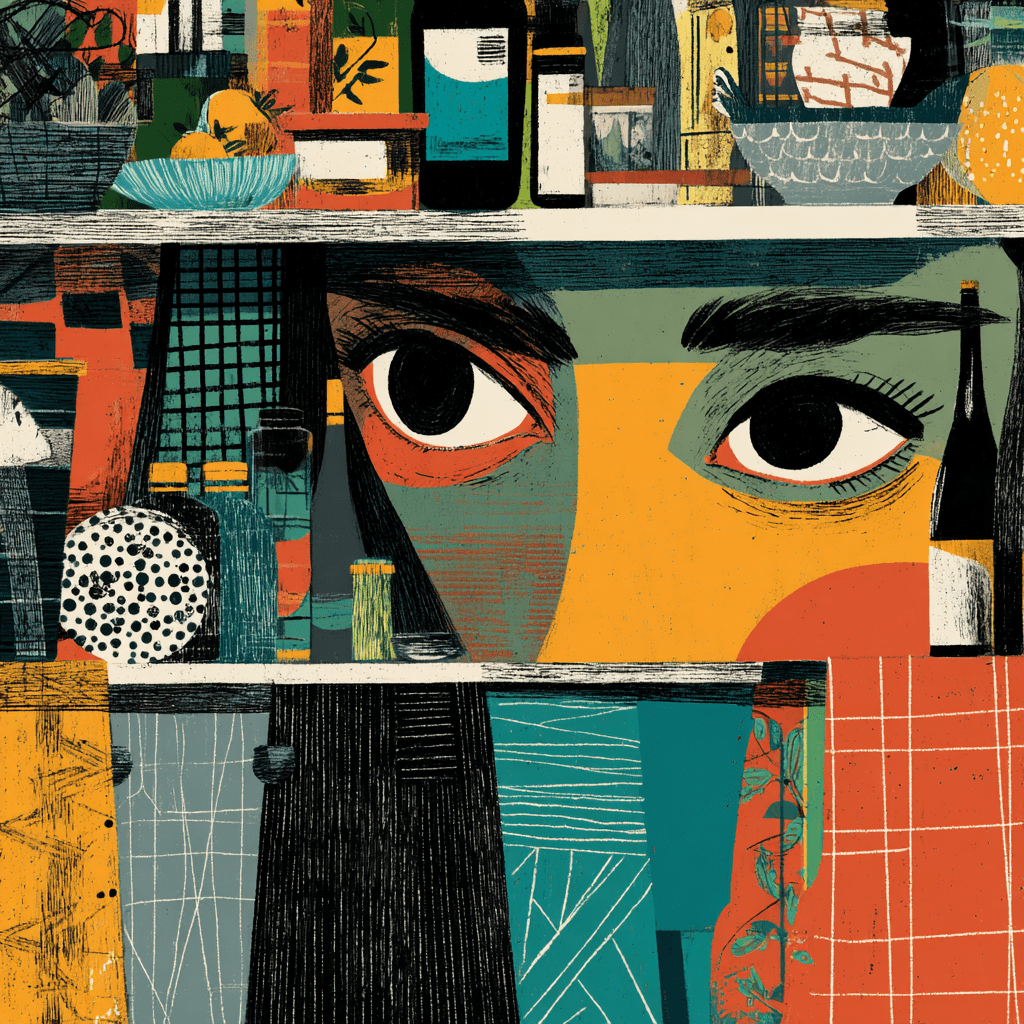
“I’m sorry. It’s not normally like this, I promise.”
A while back, my research partners at CP+B and I were visiting families at home on behalf of a meal delivery company. We wanted to get a sense of their eating habits — why, what, when and how they ate.
One Friday afternoon we were speaking with “Nicole” in her living room, amidst the far-flung suburbs of San Diego.
She manages mealtime. She told us her family prefers organic, mostly natural foods. She cooks from scratch regularly. She shops at Whole Foods and Safeway. Sometimes she’ll order out because who always has time for a good meal.
As she shared details of family life it became obvious that Nicole is her family’s fixer. It’s a role she’s proud of.
We made our way towards the kitchen and asked “can you show us your pantry?”
Nicole paused and her eyes shifted. Then she opened the door.
The shelves were stocked with processed foods and snacks. The fridge and freezer, more of the same. Ice cream, frozen pizzas.
This wasn’t the picture that she had painted for us.
That’s when she said the words that still resonate:
“I’m sorry. It’s not normally like this, I promise.”
Why apologize?
Had we as researchers done a poor job of conveying our impartiality? Did she think we were judging her? Was she judging herself?
I suspect this is where many product and marketing strategists come up short.
It’s fair-ish to assume the world’s Nicoles simply need more healthy eating options for her family. Or maybe she needs simpler pre-made meals. Perhaps a subscription service.
Yes and?
What’s the layered story of how Nicole sees herself? What adds to or subtracts from that? That’s the real briefing question.
We’re missing opportunities to add meaningful value when we don’t honor that story, and make that the focus of our work.
Some context: these moments came during my second phase of 5+ years working with Domino’s. I was VP of Experience Design at CP+B. We’d already launched the Pizza Tracker, and the digital ordering platforms we created were a huge part of Domino’s ‘Transparency’ turnaround.
What comes after transparency? Once you’ve proven out that the pizza is real, that it tastes better, that it sucked before, what’s going to fuel the next five years?
Nicole’s moment revealed a customer truth that shaped the next stage of our transformation.
Instead of trying to make sense of what people wanted, we paid more attention to the stories they were telling themselves, and the gaps between aspiration and reality.
That shift from problem-solving to story-honoring became central to our personalization and design strategy. It’s how many of us learned to see customers as complex people beyond their delivery addresses.
One-tap ordering soon followed. (Zero-tap, even.) And we built out multiple ordering experiences for Nicole that made life ridiculously easy.
It was an honor to learn she and others like her trusted us with their family dinner stress.
 Ah, Humans